Many books have been written on International Development and several are of great worth. However personally, I believe that often there is are simple solutions to many major international development problems. Too often complicated and/or expensive solutions are designed and implemented causing poor uptake and wasted aid.
I frequently meet volunteer and professional development workers who ask for advice on different issues. I can not begin to list all these topics here, however I thought I would list some technologies that come up more more often:
– Bucket Kits: Drip Irrigation
– Tin Pot Stoves
– Shallow Well Walls
– Pair-Wise Ranking for Needs Assessment
Bucket Kits: Drip Irrigation
These kits are truly fantastic I’ve set up several school gardens based on these kits, though usually much larger, and can not recommend them enough they are both water and labour saving. The kits are usually under $10, and produce 10-20 square meters of irrigated gardens. They are produce by Chapin (USA) and IDEI (India) and can usually be sourced in country if you can search around for the organisations importing them, for some reason uptake is rarely managed appropriately.
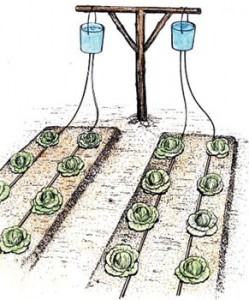
If you are contemplating a school garden, I’ve listed some frequently forgotten points:
1) Make sure the garden is large enough to produce a worthwhile quantity, otherwise people lose enthusiasm.
2) Create a team of PTA, teachers and students to manage the garden.
3) If selling produce agree where profits will be spent from the outset and create a management committee.
4) Make sure there is system for watering in school breaks and weekends.
5) A class each tending a section of the garden seems to encourage competition, ownership and involvement.
Tin Pot Stoves
Dozens of fuel efficient stoves have been designed by engineers and experts to overcome the fuel wastage, deforestation, respiratory diseases and labour inefficiency experienced throughout the developing world. These problems are created by extensive use of three-stone cook stoves, which is a fancy for cooking on an open fire.
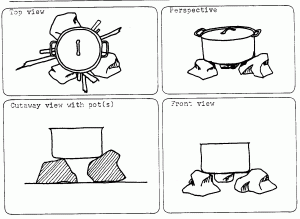
Unfortunately there are many flaws with most of these designs. Virtually all designs need users to cut wood down to lengths shorter than 30cms; creating a labour intensive awkward task that reduces stoves usage and the time saved from collecting less wood. They also predominantly cost too much and require metal work, workshops or mass production.
Another serious problem with cooking on a three-stone cook stove is that the fire is exposed and too often children fall into the fire severe burns which too often leads to lifelong disability. Too many fuel efficient stoves enclose the fire but leave exposed metal parts which become very hot, leaving the chance of children suffering unnecessarily.
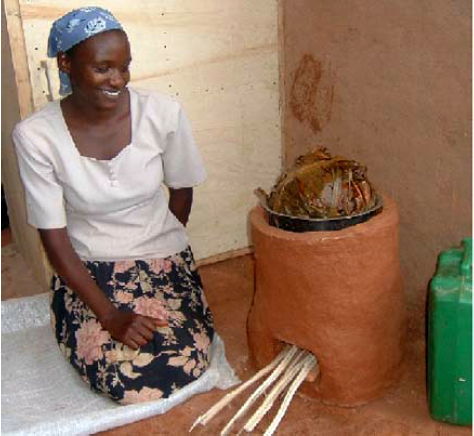
This stove is: cheap, easy to produce, doesn’t require shorten wood, dramatically reduces fuel consumption and reduces the chance of burns. There is an easy ‘how to build a stove’ guide here. I highly recommend its use and hope to start the ‘Tin Pot Charity’ in years to come to spread this technology.
Shallow Well Walls
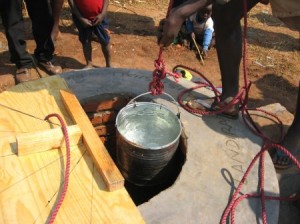
A great deal of time effort and money goes into designing playground pumps, borehole pumps and rotary pumps and a wealth of other flawed and wonderful water sources. Borehole water sources are by far the desirable option and one we should strive to, however the focus on these pumps which can cost thousands of dollars often means that simple well protection is overlooked.
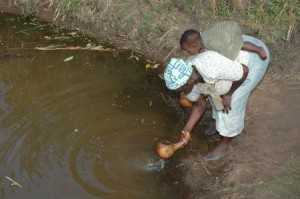
Whilst working in Malawi we discovered up to 30% of people in our area were drawing water from rivers, whilst a staggering 60% were using totally unprotected shallow wells. For the cost of £10-£30 a shallow well can be protected from the rainwater run-off and soil slip carrying contamination into a well. Yes, let’s get everyone borehole water but, whilst we wait for that let’s get everyone to stage one. A hundred improved wells or one borehole?
  |
Pair-Wise Ranking in Needs Assessment
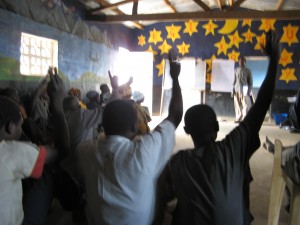 I learnt this tool from a RedR training course ran by the authors Red Cross Red Crescent Needs Assessment Policy and Frameworks. I’ve used this technique extensively whilst carry out needs assessments on issues such as General Needs, Health, Water, Education and Food Security. It is well documented technique, but it’s included in the IFRCs Assessment Manual. Of all the Participatory Rural Assessment techniques I find this the most versatile and engaging in sub-Saharan Africa. |
As far as useful advice:
1) This is a vehicle for discussion NOT just a voting system, try to encourage as much debate as possible.
2) Where ever possible use a facilitator to run the session, allowing you to listen to all the points.
3) Small side points can lead to major insights, so listen to everything.
4) ALWAYS manage expectations. If you are assessing need ensure people know why and what you’ll do with the results.
5) Let the group own their own needs, provide them with summaries and outcomes.